
ADHD can affect more than attention. It can also make eating regularly more difficult through things like executive-function challenges (ie. forgetting to eat, easily distracted, feeling overwhelmed with decisions, problems with impulse control), sensory preferences, changing hunger cues, or medication-related appetite changes.
Research around ADHD and nutrition is still evolving, so there is no single food or diet that can cause, cure, or replace medical treatment for ADHD. Instead, ADHD nutrition focuses on consistent nourishment, accessible meals, and supporting overall health without adding unnecessary food rules.
In this article, we’ll look at foods and nutrients that can support overall brain health, practical ADHD-friendly meal strategies, and when it may be helpful to work with an experienced dietitian.
- What is ADHD and How is it Diagnosed?
- What Is the Connection Between ADHD and Nutrition?
- Foods That Can Support Energy, Focus and Overall Brain Health
- Important Nutrients in ADHD Nutrition
- ADHD-Friendly Meal Strategies
- Self Compassion Matters More Than Perfection
- Why Elimination Diets Are Not Recommended (gluten, dairy, sugar, food dyes, additives)
- Frequently Asked Questions

Maria Koerner
What is ADHD and How is it Diagnosed?
Attention-deficit/hyperactivity disorder (ADHD) is a neurodevelopmental disorder characterized by persistent patterns of inattention, hyperactivity, and/or impulsivity that interfere with daily functioning. People with ADHD may have lower levels of the neurotransmitters (norepinephrine and dopamine), which plays a major role in brain signaling.
ADHD has a strong genetic component. The risk of ADHD is increased by 2–8x in people with a family history of ADHD, and up to 80% in pooled twin studies.
Symptoms begin in childhood and frequently persist into adulthood. In adults, ADHD may present as difficulty sustaining attention, disorganization, poor time management, forgetfulness, impulsive decision-making, or an ongoing sense of restlessness.
These challenges can affect many areas of life, including work, relationships, self-care, and health-related behaviors such as meal planning, grocery shopping, and maintaining consistent eating patterns.
There is no single test that can diagnose ADHD. Diagnosis is based on a comprehensive clinical assessment conducted by a qualified healthcare professional – In Canada, that may be a physician (family doctor, pediatrician, or psychiatrist) or a registered psychologist.
Diagnosis typically includes a review of current symptoms, medical and mental health history, developmental history, and the impact of symptoms on daily functioning.
What Is the Connection Between ADHD and Nutrition?
There is no single “ADHD diet,” and no food can cure ADHD. Research is always evolving, but we do know that regular, balanced meals can help support energy, focus, mood, and overall brain health.
Many of our clients struggles with their nutrition as ADHD can make eating harder.
Forgetting meals, feeling overwhelmed by meal planning, sensory sensitivities, and medication-related appetite changes can all affect how consistently, how much and what someone eats.
That is why ADHD nutrition is less about restriction and more about finding realistic ways to stay nourished and make eating easier and more consistent.
How ADHD Can Affect Eating Habits
In my practice, I see many adults with ADHD who get caught up in work, school, caregiving responsibilities, or other demands of daily life and simply lose track of their hunger cues. By the time they finally slow down in the evening, they’re extremely hungry and often reach for whatever food is easiest to access.
Over time, this pattern can make it harder to recognize hunger cues throughout the day. Many clients tell me they aren’t hungry for breakfast or lunch, but then find themselves snacking continuously. This isn’t a lack of willpower. It’s often a result of executive-function challenges, distraction, and inconsistent eating patterns.
Executive function challenges can affect planning, remembering meals, grocery shopping, and preparing food.
Some common ADHD challenges our clients report include:
- Forgetting to eat during the day
- Feeling overwhelmed by meal planning or cooking
- Making quick food choices when hunger gets too intense
- Sensory sensitivities to certain tastes, smells, or textures
- Appetite changes related to ADHD medication(s)
Foods That Can Support Energy, Focus and Overall Brain Health
While there is no single food that treats ADHD, regular and balanced eating patterns can help support energy, concentration, mood, and overall brain health.
Consistency matters more than eating perfectly. The goal is not to follow a strict diet, but to include a variety of foods as regularly as possible.
Protein-Rich Foods
Protein provides amino acids your body uses to support brain function and produce neurotransmitters. Including protein throughout the day can also help meals feel more satisfying and support steadier energy.
Pairing protein with carbohydrates can also help create a more balanced meal or snack without making food feel complicated.
Fibre-Rich and Complex Carbohydrates
Carbohydrates are an important source of energy, especially for the brain, and they do not need to be avoided with ADHD. Fibre-rich options like oats, whole-grain bread, brown rice, quinoa, potatoes, beans, lentils, fruits, and vegetables can help meals feel more satisfying.
Pairing carbohydrates with protein or healthy fats can also help support steadier energy and prevent getting overly hungry between meals.
Fruits and Vegetables
Fruits and vegetables provide vitamins, minerals, fibre, and antioxidants that support overall brain and body health. Interestingly, some research has found an association between higher fruit and vegetable intake and fewer ADHD symptoms, but this does not mean produce directly treats ADHD.
Fresh is not the only option. Frozen fruit, pre-cut vegetables, canned vegetables, fruit cups, and bagged salads can make it much easier to include produce regularly without adding more food prep.
Important Nutrients in ADHD Nutrition
Certain nutrients, including iron, zinc, magnesium, B vitamins, and vitamin D, are often discussed in relation to ADHD and brain health. These nutrients all play important roles in the body, but having ADHD does not automatically mean you are deficient in them.
Most research on supplements for ADHD has focused on children, so we also don’t know whether the same benefits apply to adults.
Supplements are not always necessary and can sometimes do more harm than good when taken without a confirmed need. A dietitian or healthcare professional can help determine whether food sources are enough or whether testing and supplementation should be considered.
Omega-3 Fatty Acids
Omega-3 fatty acids support overall brain health and are often discussed in relation to ADHD. They play an important role in brain development and function, and some studies have found that people with ADHD may have lower blood levels of omega-3 fatty acids than those without ADHD.
Research on omega-3 supplements and ADHD symptoms is promising but remains mixed with inconsistent results, so they should not be treated as a replacement for other forms of ADHD care. Instead, focus on incorporating adequate amounts in your diet and/or discuss supplementation options with your dietitian.
Omega-3 supplements may be helpful for some children with ADHD, particularly when taken consistently for at least 4 months or when omega-3 baseline levels are low.
Food sources of omega-3s include salmon, sardines, mackerel, trout, walnuts, ground flaxseed, chia seeds, edamame, tofu, and omega-3-enriched eggs.
Iron and Zinc
Iron and zinc both support important functions in the body, including growth, immune health, and normal brain function. Some research has looked at possible links between these nutrients and ADHD, with potential benefits of supplementation when low levels are indicated through a blood test.
Food sources include meat, poultry, seafood, beans, lentils, fortified cereals, pumpkin seeds, and dairy products.
B Vitamins
B vitamins support normal energy production, nervous system function, and neurotransmitter production. Because of these roles, B vitamins are sometimes discussed in relation to ADHD.
However, there is currently limited evidence that B vitamin supplementation improves ADHD symptoms in people who are not deficient.
Most people can meet their needs through a varied diet that includes whole grains, legumes, dairy products, eggs, meat, fish, nuts, and seeds.
Vitamin D and Magnesium
Vitamin D plays important roles in brain function, immune health, and overall wellbeing. Some studies have found lower vitamin D levels in children with ADHD, but researchers do not yet know whether low vitamin D contributes to ADHD symptoms or is simply associated with the condition.
Magnesium plays an important role in nervous system function, muscle function, and energy metabolism. Some studies have found that people with ADHD may have lower magnesium levels, leading researchers to investigate whether magnesium supplementation may help improve symptoms. At this time, the evidence remains limited.
ADHD-Friendly Meal Strategies That Require Less Executive Function
With ADHD, knowing what to eat is often not the hardest part.
In reality, many of my clients know exactly what they “should” be doing. The challenge is often the planning, remembering, prioritizing, shopping, and cooking that happens before the meal ever reaches the table.
Executive-function challenges can make meal planning feel overwhelming. Perfectionism can make it even harder. When people feel like every meal has to be perfectly balanced, home-cooked, and nutritionally ideal, it can become so overwhelming that they avoid planning altogether.
Instead of aiming for perfect meals, ADHD dietary support can focus on reducing the number of decisions you have to make. Simple routines, repeat meals, and convenient options can make it easier to eat consistently, even on low-energy and/or high-stress days.
Build Default Meals and Snacks
Having a few go-to meals and snacks can make eating much easier when decision-making feels overwhelming. The goal is not variety for the sake of variety. It is having simple options you know you can rely on.
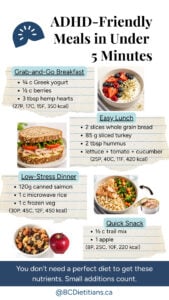
This might look like yogurt with fruit and granola, toast with eggs, oatmeal with nut butter, or rotisserie chicken with microwave rice and frozen vegetables. A meal you will actually make and eat is more helpful than the “perfect” meal that feels like too much work.
Use Convenience Foods Without Guilt
As a dietitian who works with adults with ADHD and autism, I often encourage clients to rethink how they view convenience foods. Frozen vegetables, canned beans, protein shakes, protein bars, bagged salads, pre-cooked grains, and other ready-to-eat options can be incredibly valuable tools.
I would much rather see someone consistently eating convenient foods than skipping meals because cooking feels overwhelming. In many cases, convenience foods help reduce barriers to eating and make it easier to maintain a routine.
For some people, packaged foods can also feel more predictable. Unlike fresh foods that vary in texture, smell, or taste, many packaged foods provide consistency from one day to the next, which can be especially helpful for people with sensory sensitivities.
Using convenient options does not make a meal less healthy or less valuable. Sometimes the best choice is simply the one that helps you eat.
Make Food Easy to See and Remember
With ADHD, sometimes food is simply easier to remember when it is visible and easy to grab. Keeping snacks where you can see them, storing commonly forgotten foods at eye level, or keeping simple options in your work bag can reduce the chance of accidentally skipping meals.
For clients who are starting ADHD medications, decreased appetite during the day can make regular eating even more challenging. In these situations, creating a routine around meals and snacks becomes especially important.
Reminders can also help. A recurring alarm for lunch, a short grocery list, or a few backup meals in the freezer can make eating feel less dependent on memory, motivation, or energy.
Plan for Low-Energy Days
Not every day will have the same amount of energy, focus, or motivation, so meals should not expect that from you either. Having a few options for different energy levels can make eating more realistic.
On higher-energy days, that might mean cooking a full meal. On medium-energy days, it could be assembling pre-cooked ingredients. On low-energy days, a frozen meal, snack plate, or ready-to-drink option can still get the job done. Consistent nourishment matters more than making everything from scratch.
Another strategy I often use with clients is helping them identify their values around food. Do you enjoy cooking, or would you rather keep meals simple? Is sustainability important to you? Do you prefer convenience over variety?
When you understand what matters most to you, it becomes easier to make food decisions that align with your lifestyle instead of feeling pulled in different directions by nutrition advice online.
Respect Your Sensory Preferences
Many adults with ADHD experience sensory sensitivities related to food textures, smells, temperatures, or appearance.
A lot of people do feel guilty about the way that they eat or the food that they choose. I often hear clients describe foods that others consider “normal” as being difficult or unpleasant to eat. For example, some people find chicken has a woody or stringy texture that they simply cannot tolerate.
Unfortunately, many have spent years being told to “just get over it” or force themselves to eat foods they dislike.
In my practice, I take a different approach. Rather than fighting sensory preferences, I work with them. You do not need to force yourself to eat foods that feel unpleasant in order to have a nutritious diet.
Instead, I focus on building meals around foods you already enjoy and tolerate well, then identifying opportunities to support your nutrition goals within those preferences. Nutrition plans are often more successful when they work with your sensory needs rather than against them.
Self Compassion Matters More Than Perfection
Many adults with ADHD carry a lot of guilt around food. They may feel frustrated that meal planning feels difficult, that they forget to eat, or that they rely on convenience foods more often than they would like.
I encourage my clients to practice self-compassion instead of perfection. Progress doesn’t require perfect meals, perfect routines, or perfect consistency. Sometimes success looks like eating a protein bar instead of skipping lunch. Sometimes it looks like taking a few bites of food when that’s all you can manage.
The goal is not perfection. The goal is consistently showing up for yourself in ways that feel realistic and sustainable.
Why Elimination Diets Are Not Recommended for ADHD
It can be tempting to remove foods like gluten, dairy, or sugar when looking for ways to manage ADHD symptoms, but there is not enough evidence to recommend these restrictions for everyone with ADHD.
Unless there is a diagnosed allergy, intolerance, or another medical reason, restrictive diets can make eating more complicated and may increase the risk of nutritional gaps, especially for children or people who already have a limited range of accepted foods.
Should Someone With ADHD Avoid Gluten or Dairy?
There is no strong evidence that avoiding gluten or dairy improves ADHD symptoms for everyone.
These foods generally only need to be removed if there is a diagnosed allergy, intolerance, celiac disease, or another medical reason.
Cutting out entire food groups without a clear need can make eating more restrictive and may make it harder to meet your nutritional needs.
Does Sugar Make ADHD Symptoms Worse?
While some studies have found an association between higher intakes of added sugar, sweets, and sugar-sweetened beverages and greater ADHD symptoms, the evidence does not show that eating sugar directly causes ADHD symptoms. Many of these studies only show a connection, so it’s hard to know whether sugar itself is responsible or if other eating habits and lifestyle factors play a role.
Some people with ADHD may also be drawn to sweets due to the differences in the brain’s reward and dopamine pathways. This doesn’t mean that people with ADHD are “addicted to sugar”, but highly palatable foods can provide a quick, rewarding experience that may make them appealing when someone is bored, stressed, understimulated, overwhelmed or looking for a quick energy boost.Fluctuating blood sugar levels can affect mood and energy levels, and may affect ADHD symptoms.
There is no need to eliminate sugar altogether, a more practical approach is to eat regular, balanced meals and snacks and include sweets as part of an overall varied diet. Pairing carbohydrate-rich foods with protein, fibre, and/or fat can also help make meals and snacks more satisfying. Learn more about managing sugar cravings here.
What About Food Dyes and Additives?
Some children with ADHD may be sensitive to certain food dyes or additives, but that does not mean everyone with ADHD needs to avoid processed foods or artificial colours.
If you suspect a specific food is affecting symptoms, it is better to explore that pattern with a healthcare professional or dietitian rather than removing multiple foods at once.
What Does ADHD Dietary Support From an Experienced Dietitian Include?
When to Speak With a Dietitian
- Significant or unintentional weight loss
- Frequently missing meals
- Ongoing dizziness, weakness, or fatigue
- A very limited range of accepted foods
- Suspected nutrient deficiencies
- Binge eating or restrictive eating
- Significant anxiety or stress around food
- Major appetite changes from ADHD medications
- Concerns about a child’s growth
ADHD nutrition support should work alongside care from your physician, psychologist, psychiatrist, or other healthcare providers, not replace it.
Find ADHD Dietary Support From an experienced Dietitian
After working with many adults with ADHD and autism, I’ve found that nutrition support is rarely about creating the perfect meal plan. More often, it’s about reducing barriers to eating.
This may involve creating routines around medication schedules, identifying low-effort meal options, organizing your environment so food is easier to remember, or finding foods that work with your sensory preferences. It may also involve clarifying your values and building an approach to eating that fits your lifestyle instead of forcing yourself into a plan that was never designed for you.
The most effective nutrition strategy is not the one that looks perfect on paper, but one that you can realistically maintain.
You are okay as you are. If you’re ready to learn more about my acceptance-based approach to ADHD and autism nutrition support, and create a plan that works with your brain instead of against it, message me to book a free 20-min consult.
ADHD dietary support should be personalized, not built around a rigid meal plan. I work with my clients to :
- Create more regular meals and snacks
- Work around medication-related appetite changes
- Find foods that work with sensory preferences
- Make grocery shopping and meal prep easier
- Identify possible nutritional gaps
- Decide whether supplements may be appropriate
- Support selective or limited eating
- Build a less stressful relationship with food
The goal is to make eating feel more manageable while still supporting your overall health.
Frequently Asked Questions About ADHD Nutrition
No. ADHD is a neurodevelopmental condition, and nutrition cannot cure it. However, eating regularly and getting enough nutrients can help support energy, focus, mood, and overall health.
There is no single best food for ADHD. A balanced approach that includes protein, carbohydrates, healthy fats, fruits, and vegetables can help support steady energy and overall brain health.
Protein is important, but you do not need to follow an unusually high-protein diet because you have ADHD. Including a source of protein in meals and snacks can help make them more balanced and satisfying.
Research on omega-3 supplements and ADHD is still mixed. Some people may benefit, but supplements should be based on individual needs. Speak with a physician, pharmacist, or dietitian before starting one, especially for children or anyone taking medication.
Yes. A dietitian can help create meal strategies that take executive function, sensory preferences, appetite, medication, schedule, budget, and other health needs into account. The goal is to make eating easier and more sustainable.
Caffeine affects everyone differently and is not a replacement for ADHD medication. For some people, it may increase anxiety, irritability, sleep problems, appetite changes, or a racing heart. These effects may also be stronger when caffeine is combined with stimulant medication, so it is best to speak with your healthcare provider if you are unsure.








Add a comment