
Grocery stores are full of choices and it’s often the first step in meal planning and making healthier choices. How do you know which ones support your health, lifestyle and budget? Is it as simple as reading a nutrition label or perhaps just “shop the perimeter”?
BC Dietitians was invited to provide 2 interactive grocery store tours to celebrate the opening of the new Safeway at Oakridge Mall. Participants explored how everyday shopping decisions could make a difference in their diet and nutrition. They were extremely engaged, taking notes and videos with their phones and asking great questions!
The first tour was focused on healthy aging and heart health and the second tour was on weight management and shopping on a budget.
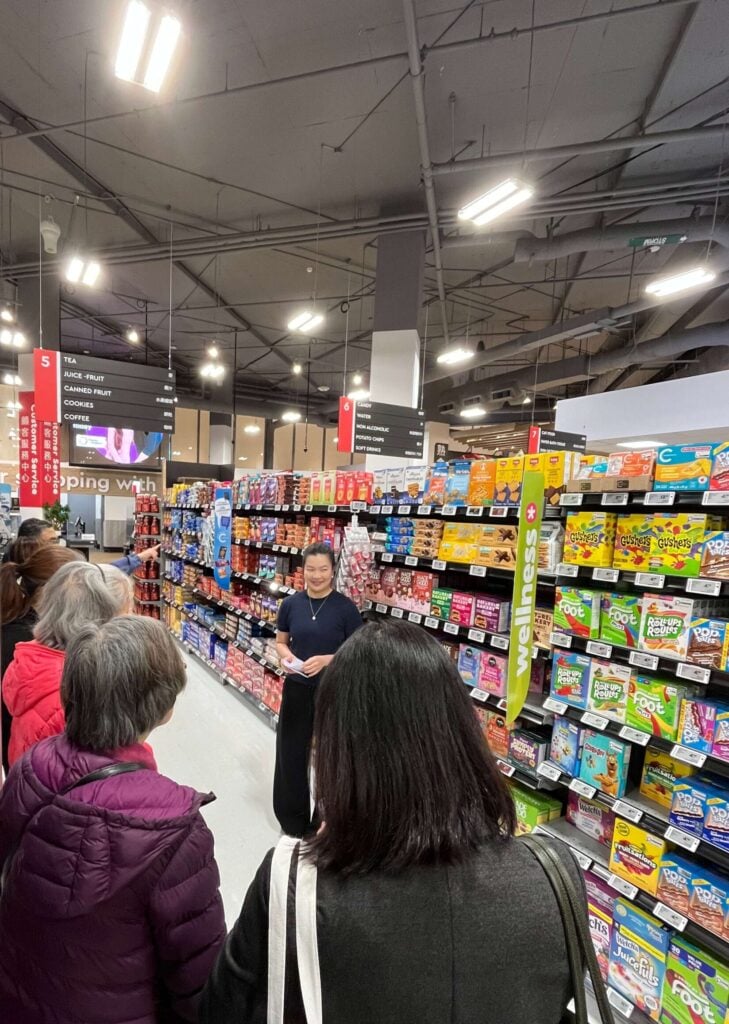

Jaylene Mah, Registered Dietitian
Heart Health and Healthy Aging
The participants started off in the canned goods aisle. Their nutrition knowledge was put to the test with comparing nutrition labels with similar products like canned beans, vegetables and soups. They practiced checking serving sizes, sodium, saturated fat and %daily value (DV).
We discussed a useful shortcut to remember when reading labels while on a time crunch: 5% DV or less as a little and 15% DV or more as a lot.
The aim was not finding the “perfect” foods but get into the routine of comparing food items and choosing the “healthier” choice when it’s possible. We also discussed the differences between a label that read “low sodium” vs. “reduced sodium” vs. “no salt added”. The main takeaway here was that reduced sodium or low sodium meant that the product has less sodium than the regular version, but it doesn’t necessarily mean it’s low in sodium, whereas “no salt added” meant that the food naturally has sodium but no additional salt was added during processing.
From deli meats to fresh meat, frozen meals, and dairy products, we continued comparing similar foods. We explored leaner meat options, checked protein and sodium in frozen dinners, and discussed how replacing some saturated fat with unsaturated fat can help lower LDL cholesterol. One key lesson? A high-protein product isn’t automatically heart-healthy, and “fat-free” doesn’t always mean better. The overall nutritional profile matters!
At the end of the day, healthy aging does not mean you have to give up the foods you love -it’s about finding small and practical ways that work for you.
Weight management and balling on a budget
This tour was focused on making nutritious choices that fit everyday life. The takeaway was: the cheapest option isn’t always the best value if it goes uneaten.
Here were some of the strategies discussed:
Buy produce you will actually eat. Carrots are versatile and provide fibre and beta-carotene; cabbage is affordable, provides fibre and vitamin C, and keeps well. Fresh, frozen, and canned produce can all contribute to a nutritious diet.
Make your produce last longer. Use delicate foods such as berries, spinach, and salad greens first. Save longer-lasting options, such as carrots, cabbage, and apples, for later. Freeze suitable fruit before it spoils.
Avoid the sale trap. Before buying a large quantity of discounted produce, ask yourself whether you will realistically eat it. Planning meals around your schedule can help reduce waste and save money.
Stretch ingredients across several meals. Try a “one ingredient, three meals” approach. For example, use carrots in a snack, a soup, and a stir-fry. Planning multiple uses for the same ingredient can make grocery spending go further.
Choose snacks that satisfy. When comparing granola bars, crackers, nuts, and fruit with peanut butter, think beyond calories. Protein, fibre, volume, and portion size can all influence how satisfying a snack is. Nuts and trail mix provide beneficial nutrients but are energy-dense, so portioning them into a bowl instead of eating straight from the bag can help with awareness.
Think about what your drinks contribute. Compare serving sizes, sugars, and ingredient lists when choosing beverages. Milk can provide protein, calcium, and vitamin D, while unsweetened sparkling water offers hydration without added sugars. “Natural” or “made with real fruit” doesn’t automatically mean a drink is low in sugar.
Balance convenience with cost. Pre-cut produce and ready-made meals can be useful when time is limited. The best choice is one that fits your budget, helps you meet your nutritional needs, and makes it easier to eat well consistently.
Summary
The focus was not about counting calories, memorizing numbers on a label or even cutting out any foods. Choosing satisfying meals and food items that you would actually eat and enjoy can make approaching weight management and overall health a much more easier and sustainable task.






Add a comment