
In my previous post, I talked about how to make nutrition work for fertility – the key nutrients, supplement considerations, fertility conditions, and frequently asked questions such as weight management for fertility.
When you are trying to conceive, waiting can feel like an eternity.
As a fertility dietitian working with couples, one of the most common questions I get is: “Can I eat certain foods to boost my progesterone level and help with fertility and implantation?“
Progesterone-rich foods have gained popularity and are said to help with fertility; however, the evidence is mixed and often misunderstood. While social media often promises that a simple grocery list can “boost your progesterone”, the science shows that how food affects our hormones is a lot more complicated than that.

Annie Tsang
In this article, I’ll explain the link between the food you eat and your progesterone levels. We will look at what the science actually says about “hormone-boosting” foods, and why a personalized nutrition plan is your best tool for preparing your body for pregnancy.
What is Progesterone and its Role in Fertility?
Progesterone is a super important hormone in fertility and early pregnancy. In fact, its name actually means “in favour of pregnancy“.
Progesterone production and levels follow a strict timeline. Your body only makes progesterone after you ovulate (when an egg is released). The empty shell left behind by the egg turns into a tiny temporary hormone factory called the corpus luteum. This factory is what pumps out progesterone during the second half of your cycle, known as the luteal phase.
Once progesterone is released, it has a few vital jobs to do:
- Prepares the womb: It stops the lining of your uterus from just getting thicker and tells it to start making nutrients. Think of it as turning the womb into a soft, cozy velvet blanket for a fertilized egg.
- Helps with implantation: It makes sure there is great blood flow to the uterus so that a tiny embryo can safely attach to the wall.
- Relaxes the muscles of the uterus: This stops contractions that might otherwise push a newly attached embryo away.
If you don’t ovulate, or experience a short luteal phase (less than 11-12 days between ovulation and your period, due to corpus luteum breaking down too early), your progesterone levels will drop too early in the menstrual cycle. This can cause premature spotting before your period begins, a short cycle, or make it very difficult for an embryo to implant properly – which may lead to implantation failure or early miscarriage.
Studies have shown that progesterone support maybe helpful in patients with previous infertility or miscarriage.
The Myth of Progesterone Foods
Let’s clear up a major piece of misinformation right away: No foods contain actual human progesterone.
While certain plants like wild yams contain a compound called diosgenin, a precursor of various steroid hormones including progesterone, the human body cannot convert it into progesterone.
Here are some commonly promoted ‘progesterone foods’ and how they may help with fertility even though they do not increase your progesterone hormone.
- Avocados: Avocados are high in monounsaturated healthy fats. Your body physically requires healthy fats to build its own reproductive hormones. They also contain Vitamin E, an antioxidant that plays a role in helping improve blood flow to the uterine lining.
- Nuts and Seeds: Pumpkin seeds, sunflower seeds, and walnuts are frequently pushed in online trends like “seed cycling”. While seeds won’t automatically change your hormone levels, they provide zinc, magnesium, and essential fatty acids that support healthy egg development and play a role in regulating the nervous system.
- Eggs: Eggs naturally contain high-quality fats and cholesterol, which your body uses to make progesterone. They are also rich in choline and Vitamin B6, which are critical for early embryo development.
- Salmon: Salmon is high in Omega-3 fatty acids. Omega-3s play a role in lowering inflammation and support strong blood flow to the reproductive organs, helping the womb prepare for implantation.
- Leafy Greens: Spinach, kale, and Swiss chard are full of B-vitamins (including folate), calcium, and magnesium. These nutrients play a key role in helping your liver clear out excess hormones and in keeping your energy levels stable.
- Legumes: Legumes, such as lentils, chickpeas, and beans, are excellent sources of plant-based protein and fibre. They help support steady blood sugar levels and healthy insulin function, which can be particularly beneficial for people with insulin resistance or PMOS/PCOS. Because insulin resistance can interfere with normal ovulation, improving your metabolic health is one way nutrition may contribute to reproductive health and healthy progesterone production.
Nutrition that supports fertility and healthy pregnancy
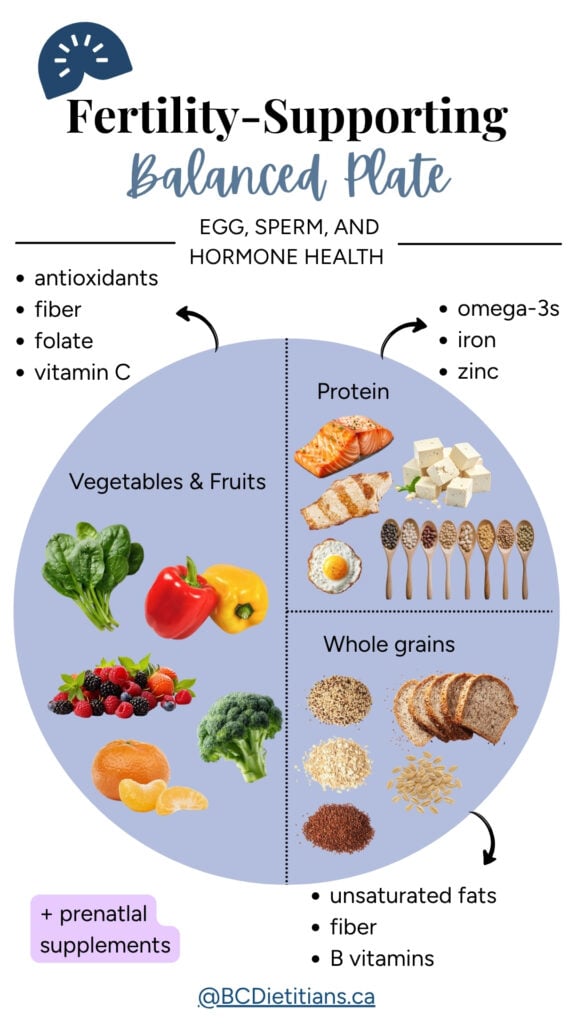
Your body creates progesterone from cholesterol. While your body can make its own cholesterol, eating enough food and getting a balance of nutrients, including healthy fats, is important for reproductive health.
Undereating, low body weight, excessive exercise, or prolonged stress can disrupt ovulation, which may lead to lower progesterone levels.
Certain nutrients give your body the raw building blocks it needs to make its own progesterone. Egg development happens over several months, making consistent nutrition an investment in your fertility health – not just this month, but in the months ahead.
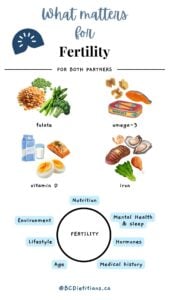
Here are the key vitamins and minerals from our diet that support healthy ovulation and hormone production:
Healthy fats: Healthy fats support overall reproductive health and provide essential fatty acids that your body needs for normal functioning.
-
- Women reproductive age:
- Omega 6: 12 g/d
- Omega 3: 1.1 g/d
- Women reproductive age:
-
- Women during pregnancy:
- Omega 6: 13 g/d
- Omega 3: 1.4 g/d
- Women during pregnancy:
-
- Men:
- Omega 6: 17 g/d
- Omega 3: 1.6 g/d
- Men:
Vitamin B6: Vitamin B6 plays an important role in many metabolic processes that support overall reproductive health. Some research suggests that adequate vitamin B6 levels before pregnancy may be associated with a greater likelihood of conception and a lower risk of early pregnancy loss.
-
-
-
- Women: 1.3 mg/d
- Women during pregnancy: 1.9 mg/d
- Men: 1.3 mg/d
-
-
Vitamin C: Vitamin C is an antioxidant that supports overall reproductive health. Some research suggests it may also play a role in progesterone production, However, more research is needed to suggest supplemenation.
-
- Women: 75 mg/d
- Women during pregnancy: 85 mg/d
- Men: 90mg/d
Zinc: Zinc is an essential mineral that supports reproductive health, including egg development and maturation. Adequate zinc is important for normal ovarian function and ovulation, which is necessary for progesterone production during the second half of the menstrual cycle. However, there is limited evidence that consuming additional zinc directly increases progesterone levels or improves fertility in people who already meet their zinc needs.
-
- Women: 8 mg/d
- Women during pregnancy: 11 mg/d
- Men: 11 mg/d
What About Seed Cycling for Hormone Balance?
If you have spent any time looking up fertility tips online, you may have come across seed cycling. This is the practice of eating specific raw, ground seeds during different phases of your cycle to help balance your hormones.
Typically, the routine looks something like this:
- Days 1 to 14 (Follicular Phase – menstruation to ovulation) ): 1 tablespoon each of pumpkin seeds and flaxseeds daily to support estrogen.
- Days 15 to 28 (Luteal Phase – ovulation to menstruation): 1 tablespoon each of sesame seeds and sunflower seeds daily to support progesterone.
There are currently no robust clinical studies showing that seed cycling directly changes your hormone levels or increases progesterone. Your hormones will not automatically shift just because you switched from flaxseeds to sunflower seeds on day 15.
However, as a fertility dietitian, I still love incorporating these seeds into my clients’ routines but not for the reasons social media claims:
- These seeds are naturally loaded with the nutrients your body needs to make hormones. Pumpkin seeds are rich in zinc, sunflower seeds are packed with Vitamin E and selenium, and all of them provide excellent amounts of healthy fats and magnesium.
- Seeds are high in dietary fiber and plant-based protein. Fiber helps slow down digestion, reducing the insulin and blood sugar spikes that can negatively affect ovulation. Fiber also helps keep your digestion regular, which is how your body safely eliminates excess estrogen in the digestive tract.
Other Fertility Hormones
When you are trying to maximize your implantation window, it is easy to get hyper-focused on progesterone. However, focusing on just one hormone can be misleading.
For your cycle to be regular and fertile, a number of hormones must work together in harmony:
- FSH (Follicle-Stimulating Hormone): Released by the brain at the start of your cycle, FSH acts on your ovaries, telling them to start maturing a group of eggs.
- Estrogen: As those eggs grow, they produce estrogen. Estrogen’s main job is to build up the initial layers of your uterine lining and tell the brain when an egg is fully mature and ready.
- LH (Luteinizing Hormone): Once estrogen peaks, the brain releases a big surge of LH. This hormone acts as the final green light that causes the dominant follicle to rupture and release the egg (ovulation). Without this LH surge and successful ovulation, your body cannot begin making progesterone.
- Thyroid Hormones: If your thyroid hormones (like T3 and T4) are too low or too high, it can delay egg development and prevent ovulation.
- Prolactin: This hormone is primary for milk production, but if your levels are elevated when you aren’t breastfeeding, it acts as a biological brake system, shutting down the release of FSH and LH.
Fertility depends on a coordinated, interconnected system. To truly optimize your fertility, we have to look at the entire hormonal picture.
Ready to optimize your cycle for pregnancy?
If you are tired of trying to piece together generic online advice and want a clear, step-by-step strategy tailored to your lab results, cycle timeline, and your lifestyle, I’m here to help.
As a fertility dietitian, I work closely with both you and your partner to uncover the root causes of your cycle imbalances, optimize egg and sperm quality, and give your body the exact building blocks it needs for a successful pregnancy.
Book a discovery call with me today, and let’s build your personalized fertility nutrition plan together.






Add a comment