
I had the chance to attend the inspiring Nourish Symposium in Vancouver Oct 7 & 8. I don’t know of any other conferences that can bring leaders from all different spaces (government, industry, health authorities, private, food services, practitioners) are fully committed to harnessing the healing power of food in healthcare and that is music to my years as a registered dietitian.
I was honored to learn from the different perspectives of our healthcare champions and colleagues across Canada, including dietitians, physicians, researchers, chefs, Indigenous elders, food service operators and more. You can just hear their passion and dedication on “Food is Medicine”. If we can invest more time and resources into creating meals that are nourishing, culturally relevant, and environmentally friendly for our patients, we will create meals that are tasty, budget friendly and eaten by patients. Dietitians can bring these considerations into personalized nutrition care.
Food is our common language and connection point
We started off the day in different learning journeys, and I participated in the Skript Kitchen, cooking with Ontario Red Seal Indigenous Chef, Rick Powless and hearing the stories behind the ingredients.
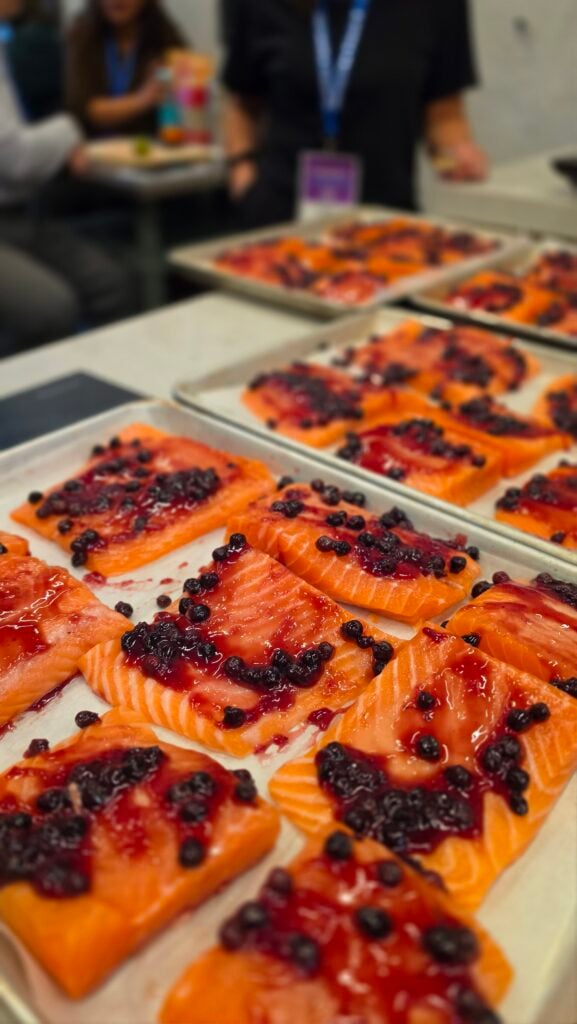
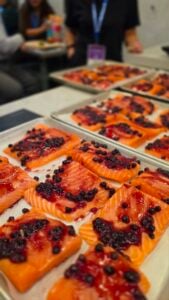
We first started the day with a ceremonial strawberry drink to put us “in good mind”, we then made our lunch together in different stations. Our lunch menu consisted of baked salmon with Saskatoon berry glaze, three sisters (white or harmony corn, beans and squash) with wild rice and ramp pesto (made with sunflower seeds instead of pine nuts), and for dessert, baked apples stuffed with wild rice, berries, and maple syrup.
Chef Rick had many stories to share about the “turtle island ingredients”, he emphasized on “know where you are” – paying respect to the land by using seasonal and local foods available. It was very interesting that we didn’t use any salt, refined sugar, garlic, onion, celery and the meal was still so flavorful because Chef Rick wanted us to really taste the fresh and wholesome ingredients.
Chef Rick taught us about authentic indigenous ingredients, respectful preparation, and engaging Elders early in co-design.
Teaching kitchens for practical nutrition education
Elaine Chu (RD), Dr. Annie Lalande, Julia MacLaren (RD) shared their experiences and insights on teaching kitchens and how they have integrated culinary medicine in different projects across Canadian hospitals and healthcare systems to provide nutrition education. Two concepts that really resonated with me were the “mobile cart” and “Shared medical appointments” concepts.
Mobile cart: Teaching kitchen does not have to be overly complicated. Dietitian Elaine looked at how to help mental health patients eat more fruits and vegetables to improve brain health. She developed a mobile cart with 30 ingredients where clients can pick and choose what goes into their smoothies hence increasing their overall fruits and vegetable consumption.
Shared medical appointments: where patients can meet with interdisciplinary health care teams in the teaching kitchen and accomplish many practical goals, such as improving their activities of daily living (ADLs) by practicing skills in the kitchen and increasing range of motion through cooking alongside with improving nutrition knowledge and skills.
Food carries culture, identity, and a sense of home
Dr. Roger Wong, a geriatrician and VP, Medicine and Academic Affairs at the Vancouver Coastal Health Authority shared about recruiting a chef that knows how to cook great soups for a culturally responsive care home. Familiar soups at this Chinese care home is a reminder of residents that this is their home.
His story illustrated how food supports physical, mental, emotional, and spiritual well-being. Familiar flavours can carry memories, express cultural identity, and create comfort and connection for our clients.
This has relevance in everyday nutrition care, too. Understanding someone’s food traditions and the meals that matter to them helps dietitians develop recommendations that feel familiar, enjoyable, and meaningful. Supporting health can begin with the foods a person already knows and loves.
As dietitians, we are reminded to ask about meaningful meals and cultural preferences. We work with the client’s knowledge and seek their lived experiences. We want to engage our clients early on, reflect on where and when can we bring our clients along the journey and have them co-design the nutrition education and implementation that will impact their health.
A nourishing meal needs to be enjoyable and practical
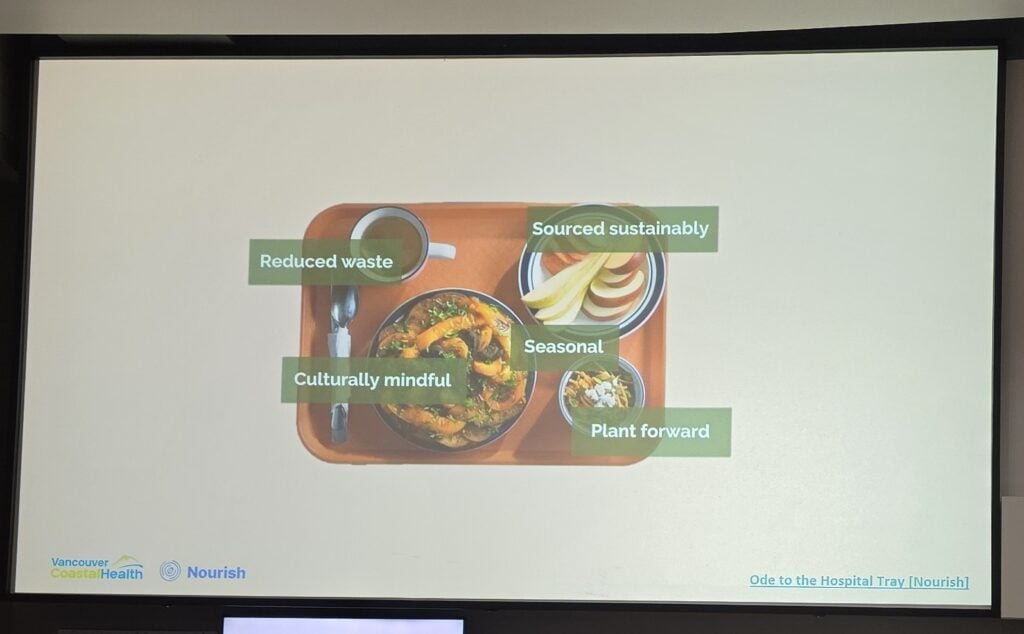
Dietitian Tiffany Chiang spoke about her leadership in revolutionizing the hospital menu. She reminded us that food cannot provide its intended nourishment if patients do not eat it.
The logistics that one must consider in ensuring standards for taste, texture, and temperature of the food behind a successful food service operations for the 12, 500 meals they produce daily at VCH. A dish that tastes great in a test kitchen may need adjustments when it travels through a tray line and may take an hour or more to reach the patient.
These practical considerations matter at home, too. A recipe needs to fit someone’s food preferences, grocery budget, preparation time, lifestyle, energy, and cooking skills. This means exploring how a recommendation will become an actual meal. Would frozen vegetables make preparation easier? Would a canned protein source help on days when someone has no energy to cook? What are some familiar different flavors they can add to make the meal more enjoyable?
Working through these details with clients helps turn nutrition advice into food they can prepare and want to eat.
Start with manageable changes to familiar meals
During our Skript Kitchen learning journey, we reflected on how satisfying meals could come together with simple ingredients and preparation. It was a reminder for dietitians that nutrition changes need to fit the time, energy, and resources people have available.
A meaningful change can often begin with a meal your client already enjoys. Instead of having your clients give up on something they enjoy, help them take a step forward with a manageable starting point, review their experience, and adjust. This could look like increasing fibre by adding beans to a familiar soup or adding tofu to a familiar meat-based meal or using frozen vegetables to make a regular dinner easier to prepare.
Summary
Many dietitians may feel pressure to teach a lifetime of healthy eating in the first consultation. A quick dietary review, a few handouts, and plenty of recommendations can fill the appointment, while the person sitting across from us may be thinking about picking up their kids from soccer.
The Nourish Symposium reminded us that food supports health through nourishment, enjoyment, culture, and connection. In dietitians’ practice, making time to connect and build trust helps us understand our clients’ concerns, food preferences, and everyday challenges. By listening, building on familiar foods, and supporting manageable changes, we can help people put advice into practice. This creates opportunities for better care and eating experiences, less food waste, and benefits for both people and the planet.
For fellow dietitians: What could you ask at your next appointment to better understand your client’s food experience?
If you’re looking for nutrition support, connect with a dietitian through BC Dietitians to develop a plan that considers your health, food preferences, culture, budget, and everyday life.






Add a comment