
Starting at 18 months of age, your child’s growth slows significantly. As a result, their appetite often drops and they may eat less than they did as babies.
It is very common to see toddlers eat sporadically.
You might notice:
- Skipped meals or very small portions
- Big meals followed by barely eating at the next one
- Sudden rejection of foods they used to love
This can be frustrating, but it’s all part of toddler development.
As a mother of a special needs child, and a pediatric dietitian, I help parents and caregivers gain confidence in managing their child’s nutritional intake effectively and take a tailored approach that meets your child’s unique needs.
In this blog, let’s talk about these eating behaviours, and practical tips on what you can do to support your child’s growth and relationship with food.

Tricia Lee, RD
Picky eating is a developmental milestone
At this age, two big things are happening:
- Growth slows down so they naturally need less food.
- Independence kicks in – toddlers realize they can make their own choices and start asserting control, and mealtimes become a common battleground.
Your baby who once ate everything may now refuse veggies, toss food on the floor, or say no before even trying a bite.
It’s normal for toddlers to eat well at only 1-2 meals per day. They’re also learning to master other important skills like walking and talking, which compete for their attention and energy.
What feels like “picky eating” is often part of this developmental stage.
Common mistakes
Parents often have expectations of what and how much our kids should or should not be eating and it can feel worrying when they seemingly aren’t eating much or when they refuse to eat nutritious foods.
As frustrating as this is, it is completely normal age appropriate.
We can help our toddlers work through this phase by adjusting the way that we react to this behaviour and creating a stress-free environment around mealtimes.
If your child does not eat the food you offer:
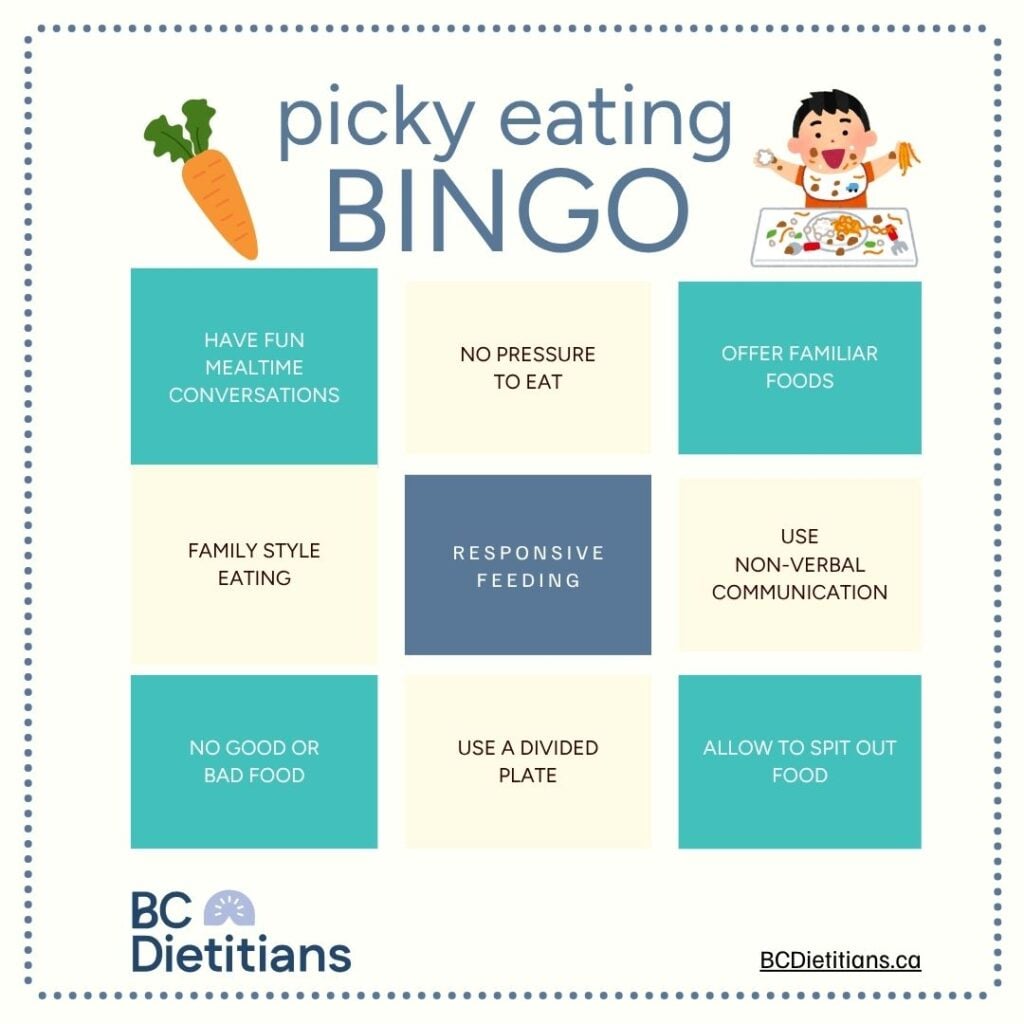
- Don’t pressure them to “just try one bite”: Pressure can turn mealtime into a power struggle and lead to more food refusal. Pushing a child to take a bite can push them past their sensory limit and may cause a negative experience with that food and cause more anxiety around mealtimes. Sometimes the less pressure, the more success with eating.
- Don’t bribe with dessert: Using sweets as a reward teaches kids to value them more than nutritious foods.
- Don’t offer constant snacks with empty calories (like crackers): Each child has their own hunger cues and already has a natural understanding of how much food their body needs. These filler foods can override their natural hunger and fullness cues and reduce their interest in meals.
It is very normal for toddlers to get only 1 or 2 good meals in a day. This is where they are gaining their fine and gross motor skills.
While these approaches come from a good place, enforcing these types of mealtime pressures often backfires in the long term and leads to more picky eating and mealtime struggles.
It is more helpful to give kids the space and the freedom to eat intuitively and listen to their internal cues regarding food intake.
What to do instead
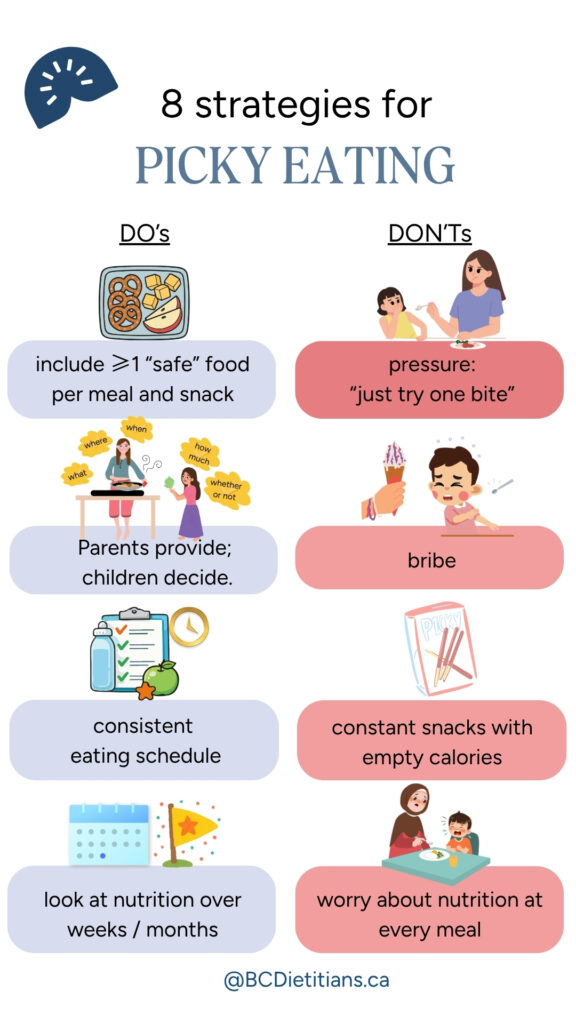
Understand Responsive Feeding
- Your role: Decide what, when, and where food is offered.
- Your child’s role: Decide whether to eat and how much.
The responsive feeding approach nurtures intuitive eating and helps navigate picky eating phases. It provides a non-pressured environment for kids to explore both new and familiar foods.
Respecting these roles reduces power struggles and supports healthy eating habits.
Research has found that what is most effective when tackling picky eating is to allow your child to eat intuitively and have complete control over their food intake. This doesn’t mean that you should only serve the foods that your child likes. Instead, give them the freedom to choose and how much to eat from the meals and snacks you decide to offer.
Babies and toddlers are born with a strong internal sense of hunger and fullness, and are naturally skilled at knowing what their bodies need and when. This translates to them eating only one fourth of the meal you have served, or refusing to try a new food, or not eating all (or any) of the vegetables on their plate.
Instead of pushing food or restricting it, responsive feeding respects your child’s natural ability to self-regulate food intake, and encourages them to continue to listen to what their bodies are telling them.
Stick to a consistent schedule
Toddlers and preschoolers have small stomachs. They do best with meals and snacks spaced throughout the day.
Example toddler feeding schedule:
- MORNING 7-7:30 Breakfast
- 10am Snack
- NOON 12-12:30 Lunch
- 3pm snack
- EVENING 6-6:30 pm Dinner
Do not offer food and drinks, apart from water, outside of set mealtimes and snack times. We want toddlers to build up an appetite between meals, which in turn will make it more likely that they appreciate the food you’re offering.
Allowing your child to graze all day reduces hunger at mealtimes and can increase picky eating.
Always include a familiar food
Include one food that you know your child will reliably eat with every meal and snack. This ensures there will always be something your child will eat. This further helps reduce the pressure when you are exposing them to a new food, as well as foods they are still learning to like.
Zoom out: look at nutrition for over a week or even a month
Instead of hyperfocusing on your child’s nutrition meal by meal, look at their intake over the week or month.
Kids eat in patterns. One day might look like carbs only. Another day, they may surprise you with how much they eat. You may be surprised to learn your child is adequately filling their nutritional gaps in their own way at their own pace.
Unless your child has a medical condition, they will often meet their nutritional needs over time, even if it doesn’t look like it day to day.
It can be very frustrating making nutritious meals that go uneaten, but nobody eats perfectly all the time, and our tastes and needs fluctuate constantly.
Conclusion
Picky eating is tough, especially when you’re trying your best to provide nutritious meals. But trust that your toddler is learning, growing, and building a relationship with food.
Your job isn’t to get them to eat – it’s to create a calm, structured environment where eating can happen.
If you’re looking to gain confidence as a parent and take the guesswork out of your child’s nutrition in this critical time of development, connect with me today for a free consultation.








Add a comment